Minimalist Black White Triangle Patterns
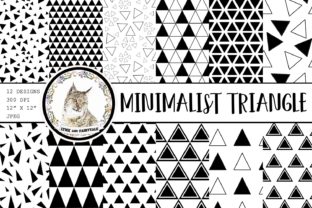
Minimalist black white triangle patterns are clean, geometric digital designs built from simple triangular shapes arranged in repeating, balanced compositions. They rely on stark contrast, intentional negative space, and rhythmic repetition—no gradients, textures, or color variation. What makes them especially useful is their seamless tiling capability: each pattern repeats flawlessly edge-to-edge, making them ideal for covering large surfaces or adapting to varied project dimensions without visible breaks.
Why These Patterns Matter—Depending on Who You Are
For a freelance graphic designer preparing branding assets for a wellness startup, these patterns aren’t just decorative—they’re strategic. A subtle triangle motif on business cards or packaging reinforces modernity and clarity without competing with typography or messaging. The monochrome palette ensures accessibility, prints reliably across vendors, and scales cleanly from social media banners to trade show backdrops.
A homeschooling parent crafting themed learning materials might use the same patterns differently. One design could become a tactile sorting game printed on cardstock; another, a calming visual anchor on a classroom wall chart. Here, durability matters less than visual calm and cognitive ease—the high-contrast geometry supports focus without overstimulation, especially for neurodiverse learners.
For a small-batch apparel maker screen-printing tote bags or scarves, flexibility is key. Because each file is 3600 × 3600 px at 300 DPI, it’s sized for both detailed close-ups (like a single triangle repeated as an all-over textile print) and broad coverage (a full garment panel). No resizing artifacts. No pixelation when scaled down for embroidery guides or up for fabric yardage previews.
What Changes Based on Your Experience Level
Beginners often prioritize simplicity and immediate usability. If you’ve never worked with seamless patterns before, this set lowers the barrier: all 12 designs are JPEGs—no need to install plugins, decode SVG syntax, or wrestle with tile settings in design software. Just open, drag, and repeat. You can apply one to a Canva invitation template in under 60 seconds, or fill a shape in PowerPoint for a presentation slide background.
More experienced users look deeper. They check whether triangles align precisely at tile boundaries (they do), whether the 12×12 inch canvas matches standard print-on-demand specs (it does), and whether the 300 DPI resolution holds up in professional offset printing (it does). They also appreciate that JPEG format—while not editable like vector—strikes a practical balance between universal compatibility and quality for raster-based workflows like photo compositing or digital scrapbooking.
Real Projects, Real Decisions
Hobbyists building custom sticker sheets might choose Pattern #7—a low-density arrangement of upward-facing triangles—because its generous white space leaves room for handwritten notes or layered die-cut elements. Its simplicity means ink won’t bleed or blur on matte sticker paper.
Educators designing printable behavior charts or vocabulary trackers may prefer Pattern #3: a tight, interlocking grid. Its visual consistency helps students track progress across rows without distraction, and the black-and-white contrast ensures legibility even when photocopied multiple times.
Entrepreneurs launching a stationery line evaluate commercial viability. These patterns are royalty-free for both personal and commercial use—no attribution required. That means you can license them as part of a digital product bundle, embed them into printable planners sold on Etsy, or use them to brand physical labels for handmade candles—all without legal review or extra licensing fees.
When Quality Meets Practicality
The 3600 × 3600 px resolution isn’t arbitrary. It’s calibrated to meet real-world production needs: enough pixels to render crisply at 12×12 inches (standard for scrapbook paper and digital paper marketplaces), yet manageable in file size for quick uploads and editing. At 300 DPI, it satisfies print shops’ minimum requirements—no last-minute resampling or interpolation that softens edges.
That precision also supports hybrid workflows. A marketer creating Instagram Story templates can crop a 1080×1350 px section from the full tile without losing sharpness. A DIY wedding planner can import the file into Cricut Design Space, adjust tile spacing for a custom vinyl decal, and cut cleanly—even on intricate triangle outlines—because the contrast gives the machine’s camera clear registration points.
How to Know If This Fits Your Next Step
Ask yourself:
- Do you need ready-to-use, no-editing-required patterns—and value time saved over infinite customization?
- Are you working across both digital and physical outputs (e.g., a blog post header + matching printable planner pages)?
- Does your workflow depend on consistent, predictable results—especially when collaborating or outsourcing print jobs?
- Is monochrome alignment with your brand, aesthetic, or accessibility goals non-negotiable?
If two or more resonate, Minimalist Black White Triangle Patterns likely match your current need—not as a “trendy” add-on, but as a functional tool that stays useful across projects, platforms, and skill growth.
One Set, Twelve Starting Points
The variety across the 12 designs isn’t about visual overload—it’s about intentionality. Some emphasize rhythm (repeating rows), others stability (interlocked tessellations), and a few lean into asymmetry (off-center clusters) while staying firmly minimalist. You’re not choosing “a pattern.” You’re selecting a visual language that supports your message: precision, calm, structure, or quiet confidence.
No design replaces your voice—but the right pattern can help it land clearly. Whether you’re drafting a pitch deck, prepping a child’s first-day-of-school banner, or prototyping a capsule collection label, these triangles don’t shout. They hold space—cleanly, consistently, and without compromise.